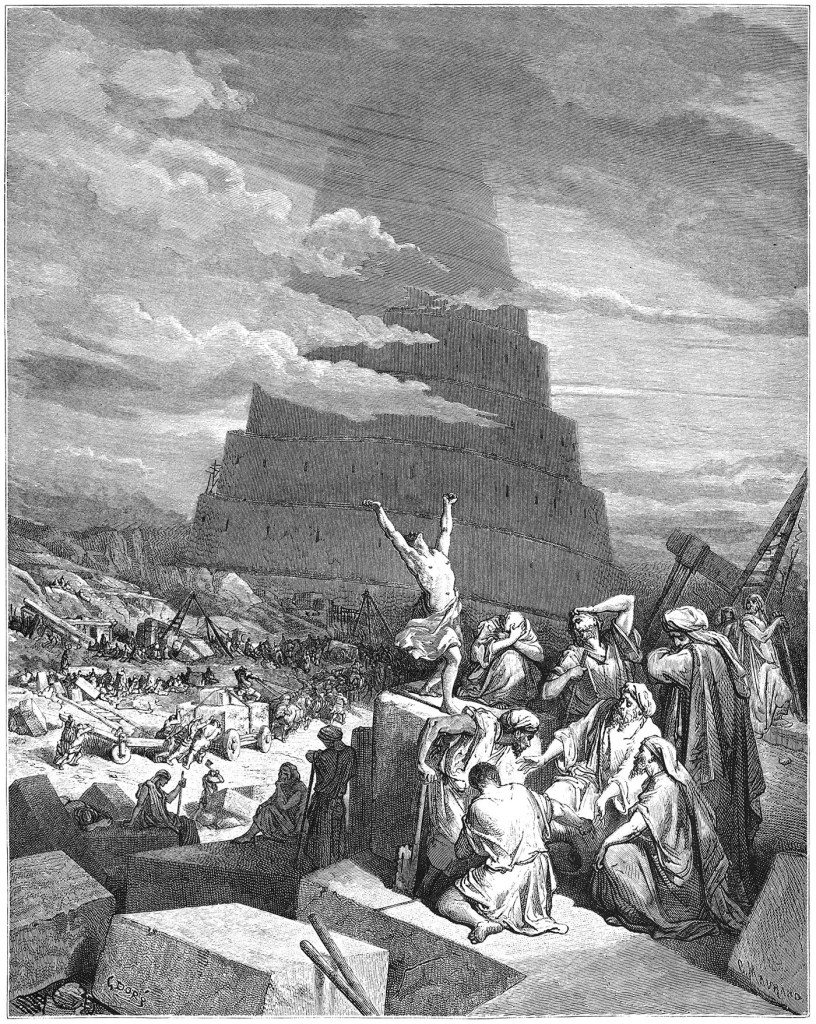
Seasons came, and seasons went
Seasons for grieving, for lamenting
Seasons for mourning, for honoring
Seasons for rest, for new life.
Soon, though, the Shinar grew tired of the rubble of empire
That littered their fields, their roads, their lives.
So, they started rolling stones.
The small stones went first –
These lined the spaces for gardens and livestock.
Next were the large stones –
These framed the houses of the newest young families.
After these, though, they continued rolling stones
For they still had too much grief to bear.
They moved stones as large as a Babel townhouse,
Stones as long as a sculpted column,
Stones as heavy as an overseer’s perch.
They rolled each of these to join in with the patterns
Already formed by the scattered ruins.
The ruins, cast apart into great arcs when felled by the river,
Resembled the dry rib bones of some desiccated beast.
The Shinar extended some of these arcs,
closed up others, and overlapped them
As far as their grief asked of them.
This formed a labyrinth with a path interwoven between the stones
And with walls tall enough to find solitude.
This Path offered no beginning, no end, not even a center.
It branched and wound and knotted and released like a vine of ivy.
It issued no commands and placed no burdens.
It listened to griefs and offered as much time as was needed.
It was a place to walk along and finally heal the wounds of empire.
And if ever a son of Babel should return,
the Path would hold space for him, too.
Let him come.
Let him hear the bones and see the scars and feel the rising of the river of seasons.
Let him lose the ways of empire in this Path as well.